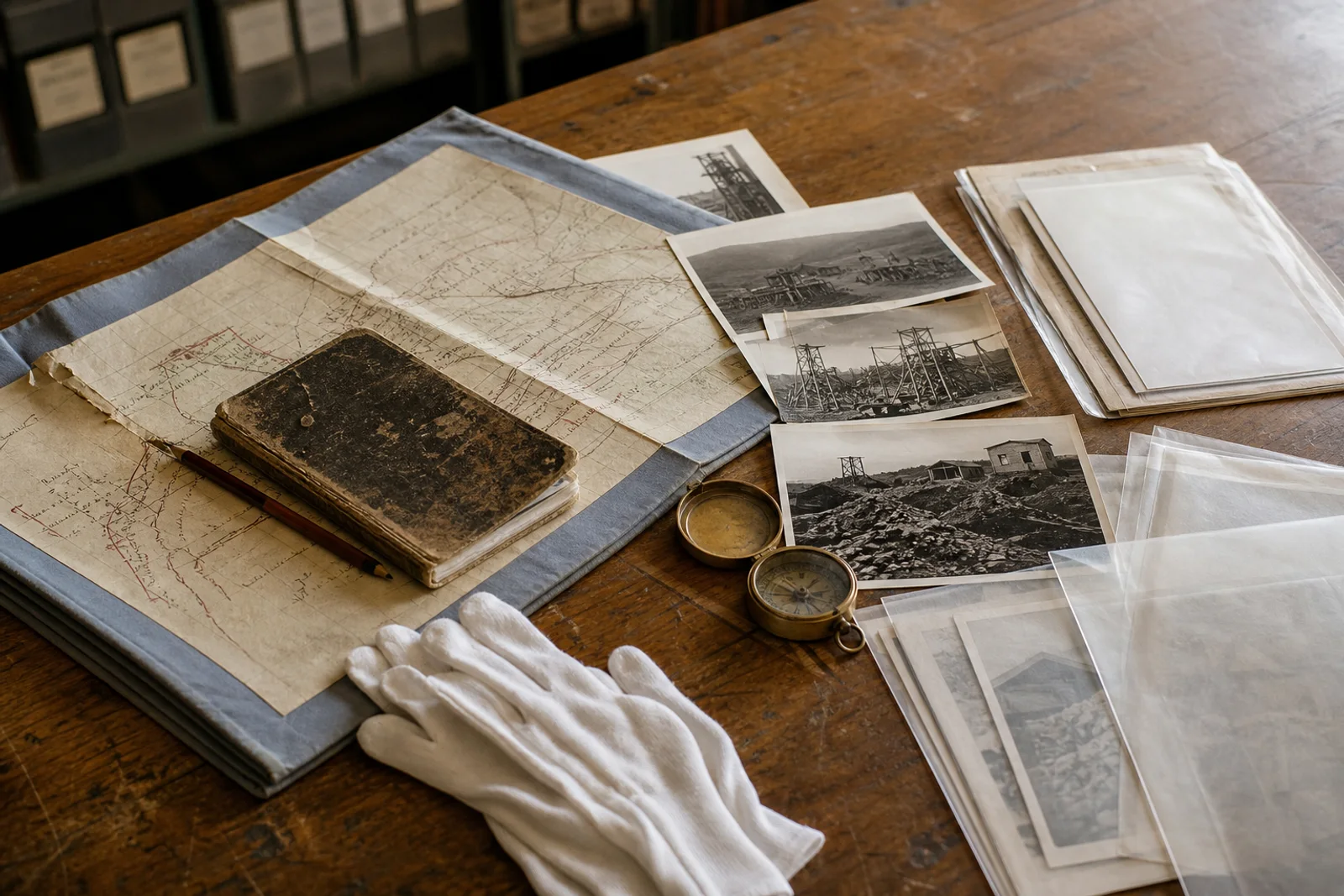
A calm first-pass method for diaries, maps, assay books and photographs before anything is scanned, donated or discarded.
“When you are handling an archival record you are usually handling the only copy that exists.”
— National Archives of Australia
Do less than you think
Keep the collection together and preserve its original order. Do not laminate, tape, flatten brittle folds or clean photographs with household products.
Record the story around the object
Write down who held it, where it came from, the names and places the family associates with it, and what is uncertain. Context can be as important as the object itself.
Create a simple inventory
Give each item or group a temporary number, a short description and a phone photograph. Keep private information private and note any restrictions the family wants observed.
Agree before sharing
A written agreement should state ownership, permitted uses, credit or anonymity, access conditions and what happens to digital copies. Originals should never move on a handshake alone.
Questions people ask
Should I laminate an old map?
No. Lamination can permanently alter an object; seek advice from a qualified conservator or archive.
Do I lose ownership if a record is digitised?
Not under the default Mines & Quarries program. Ownership and permitted use are documented before material moves.
Can my family stay anonymous?
Yes. Credit, anonymity and access conditions can be written into the agreement.
What should I submit first?
A short description and simple phone photographs are enough for an initial conversation.