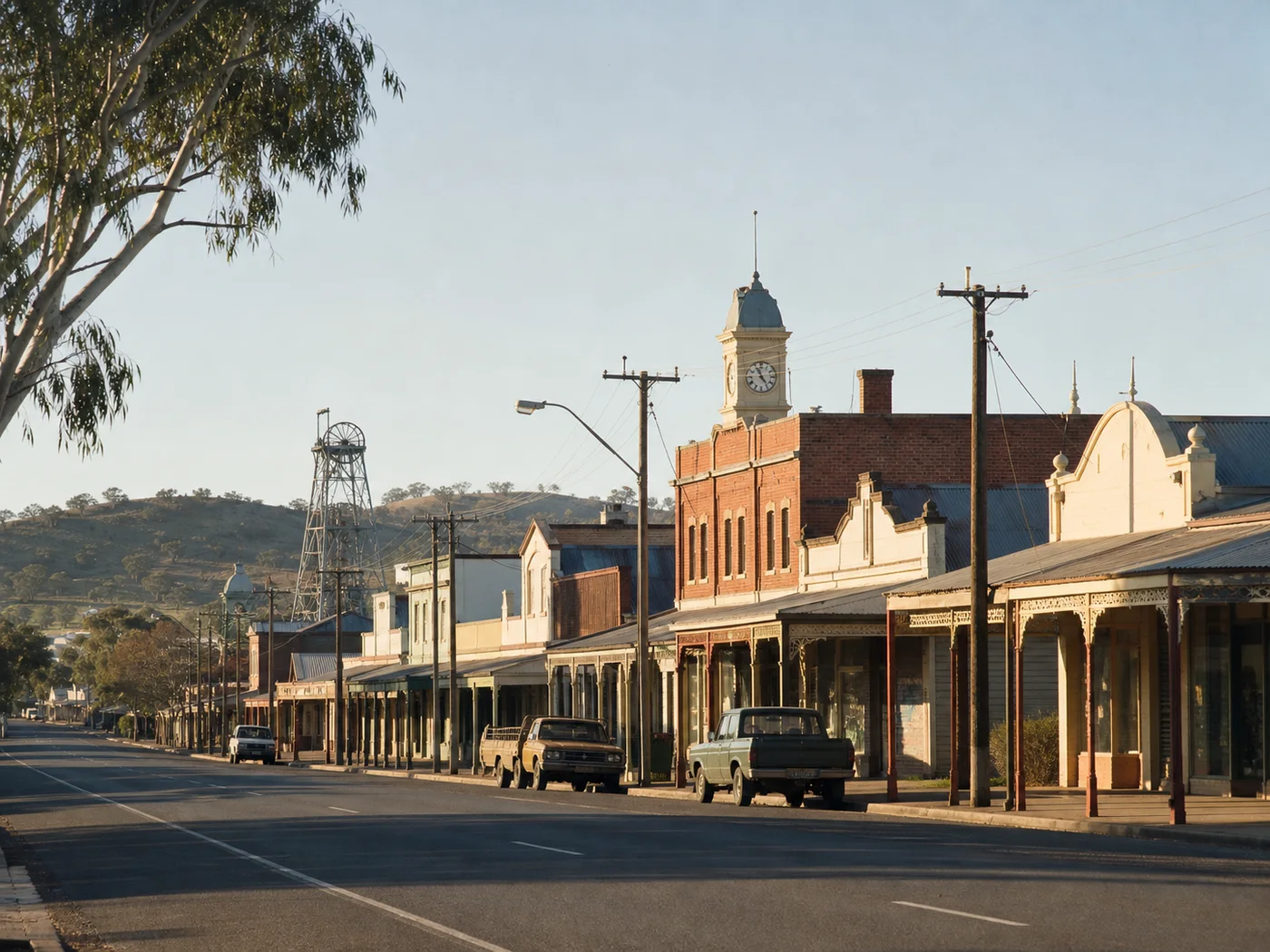
The short version
- Manningham Council says gold was found at Andersons Creek in June 1851 by Louis John Michel and his team and describes the Victoria Field as the first officially published goldfield.
- The same council source says Andersons Creek was the first place in the colony to issue gold-mining licences; Heritage Victoria’s mining-division study places the first licences in September.
- “Published field” and “first licences” are administrative claims. They do not erase the different official-recognition claim attached to Clunes.
- The Gold Memorial Cairn dates from 1935. It is evidence for twentieth-century commemoration and chosen wording, not a contemporary 1851 witness.
- The most valuable additions are a licence-register reference, the earliest notice using “Victoria Field”, party-member evidence and the council file behind the memorial cairn.
Four events sit inside the familiar Warrandyte sentence
The Warrandyte story is often told as one action: Louis Michel found gold and Victoria’s rush began. The official local sources reveal at least four documentable events—a find at Andersons Creek, publication of the field under the name Victoria Field, issue of mining licences and later commemoration. Each event has its own evidence and can involve a different date, institution or group of people.
Manningham Council’s Pure Gold exhibition page dates the Andersons Creek find to June 1851, attributes it to Louis John Michel and his team, calls Victoria Field the first officially published goldfield and says it was the first place in the colony to issue mining licences. The article should retain those exact categories rather than shortening all of them to “Victoria’s first discovery”.[1]
Heritage Victoria’s statewide account places early finds at Warrandyte, Clunes and Buninyong in the same broad August 1851 opening phase. The difference between a local event date and a statewide summary is not automatically a contradiction: one may describe the find, another the month in which news or mining activity became consequential. The source and verb must travel with the date.[6]
Louis Michel’s team needs a documented party list
The council exhibition wording deliberately says Michel “and his team”. That is an invitation to find the members named in contemporary records rather than allowing a later single-person story to absorb the party. A team list should record the source, spelling, role and whether the person is named in an 1851 item or only in a later account.[1]
Presence, participation and credit should be separate columns. A person can be present on a prospecting trip without being the person who identified a specimen; a witness can confirm disclosure without having been at the find; a later committee can credit a leader while a local memory preserves additional participants. The page should not manufacture precision where the record only says “team”.
Descendant material is especially useful when it has dates and provenance. A letter naming companions, a diary placing someone at Andersons Creek, an annotated photograph of a later gathering or a family transcript linked to an original can improve the party record. A family claim without a retrievable source remains an attributed recollection, not a definitive field.
“First officially published goldfield” is a claim about public administration
The phrase first officially published goldfield points researchers toward government notices, gazettes, correspondence and the language used by colonial officers. It is not the same test as who first saw a speck of gold or who later received a reward. A publication claim should be proven by the earliest retrievable notice and its issue date, not by a modern paraphrase alone.
The name Victoria Field is another search key. Researchers should record the first official use, variations in punctuation or locality and the relationship between Victoria Field, Andersons Creek and Warrandyte. A name can begin as an administrative label, coexist with a creek name and later become part of a civic story. Mapping each name by date prevents false duplicates.
Manningham’s heritage page points readers to its heritage database, local historical societies and the Built on Gold resources. Those are useful continuation points because a modern council page can lead to a heritage citation, which can lead to maps, plans and bibliographic references. The article should make that chain visible.[2][4]
The licence claim should be tested at register-entry level
Manningham says Andersons Creek was the first place in the colony to issue gold-mining licences. Heritage Victoria’s St Andrews division study similarly connects the first licences with Andersons Creek and places their issue in September. Together they establish a strong administrative claim and a search window. The ideal evidence is a register, numbered licence, return or official correspondence naming the issuing place and date.[1][5]
A licence record can answer more than priority. It may identify the office, official, holder, date, fee, field name and sequence. It can also reveal whether “first licences” means the first issued anywhere, the first issued at that field, or the first under a particular administrative arrangement. The page should quote the document’s category rather than letting later language decide the scope.
PROV’s council-record guide is useful for local administrative material but the earliest gold-licence evidence may sit in colonial mining, lands or correspondence series rather than a municipal archive. A council librarian can still help by identifying local copies, commemorative research files and predecessor bodies. The referral itself can be a valuable contribution.[7]
The 1935 cairn is a source about memory, wording and civic choice
Manningham’s heritage citation dates the Gold Memorial Cairn to 1935 and says it was erected to mark the site associated with the first payable goldfield. It also points to an 1856 township plan and later local histories. The cairn is therefore a strong twentieth-century source: it shows where and how Warrandyte chose to mark the story more than eighty years after the event.[3]
A monument file can contain council minutes, committee correspondence, fundraising, design choices, guest lists, speeches, newspaper coverage and changes to the final inscription. Those records can show which people were consulted, which wording was contested and whether the location was chosen for historical, practical or ceremonial reasons.
The heritage citation says no evidence was then known to remain from the earliest alluvial activities at the cairn site. That warning matters. A memorial location is not permission to infer surviving workings, disturb ground or direct detecting. Heritage Victoria notes that known and unknown historical archaeological sites can be protected and disturbance may require approval.[3]
The Andersons Creek dossier: six files to build next
File one is the discovery sequence. List every dated source that mentions Michel or the party, the claimed day or month, the locality wording, the person who received the information and whether the item is contemporary or retrospective. Keep June, August and later recognition dates in separate columns until the primary notices explain the difference.
File two is the party register. Record every member exactly as a source names them, the claimed role and the date that version entered the record. A later exhibition banner can identify the public story being commemorated; a contemporary letter or official statement carries a different evidentiary weight. Unnamed “team” references remain visible rather than being filled with an internet list.
File three is the Victoria Field publication trail. Search government gazettes, colonial correspondence, newspapers and mining administration records for the earliest official use of the field name. Capture the full notice, issue date, page, issuing office and geographic wording. If a later source uses “proclaimed” while the notice uses another administrative term, the article should retain the primary wording.
File four is the licence register. The target is not a generic image of an old licence but a numbered entry tied to Andersons Creek, an issue date and an issuing authority. Record whether the volume is chronological, whether earlier numbers exist elsewhere and what “first” can safely mean. A partial page needs the volume and page context before publication.
File five is the 1856 plan and physical-landscape evidence. Catalogue the plan at its stable repository, identify the creek and workings it depicts and compare it cautiously with modern mapping. File six is the 1935 cairn: minutes, committee names, design, speeches, site choice, newspaper reports and later maintenance. The plan and cairn answer different questions and should never be merged into a false exact discovery point.
Publish the dossier in stages. A source note can announce a verified licence reference before the complete party history is ready. A monument article can proceed while the 1851 notice remains under search. Every stage carries the open question and a pre-filled contribution link so a reader knows whether to send a name correction, document reference, map or family account.
The Warrandyte open file: eight specific things readers can contribute
The open list is: the earliest official notice naming Victoria Field; a licence or register reference from September 1851; a contemporary party list; correspondence that separates June from later public dates; the 1856 plan at a stable catalogue URL; the 1935 cairn committee file; a dated image of an earlier interpretation sign; and a family record with a clear custody history.
Submissions should begin with a description, not an original object. Include names, approximate dates, the repository or owner, the reference number, what the item appears to establish and what remains uncertain. For a photograph, describe both front and back and identify the photographer or rights holder if known.
The editorial result may be a correction, source note, party-ledger row or separate article. New evidence does not have to support the current account. A documented contradiction is valuable when it is clearly attributed and reviewed. Contributors choose named, organisational or anonymous credit before publication.
Frequently asked questions
6 answersDid Louis Michel discover gold at Warrandyte?
Manningham Council attributes the June 1851 Andersons Creek discovery to Louis John Michel and his team. A detailed party list still needs to be tied to contemporary records.
Was Warrandyte Victoria’s first goldfield?
Manningham describes Victoria Field as the first officially published goldfield. That is an administrative category and should not be substituted for every other “first discovery” claim.
Were the first Victorian gold licences issued there?
Manningham says Andersons Creek was the first place in the colony to issue gold-mining licences; Heritage Victoria’s St Andrews study places the first licences in September.
Is the Gold Memorial Cairn an 1851 source?
No. The heritage citation dates it to 1935. It is evidence of later commemoration, wording and site interpretation.
Can readers visit or detect at the discovery site?
This report is not access or prospecting advice. Historical archaeological places may be protected even when they are not obvious or listed, and disturbance can require approval.
What is the best missing source?
A stable catalogue reference for the earliest Victoria Field notice or a numbered 1851 licence-register entry would materially strengthen the administrative sequence.
Sources and continuation points
- Manningham Council — Warrandyte Pure Gold exhibitionLinked authority or collection reference; no additional data ingested · retrieved 2026-08-25
- Manningham Council — Find a heritage place in our communityLinked authority or collection reference; no additional data ingested · retrieved 2026-08-25
- Manningham Council — Heritage Study Volume 2: Gold Memorial CairnLinked authority or collection reference; no additional data ingested · retrieved 2026-08-25
- Manningham Council — Built on Gold historic town walkLinked authority or collection reference; no additional data ingested · retrieved 2026-08-25
- Heritage Victoria — Historic gold mining sites in the St Andrews mining divisionLinked authority or collection reference; no additional data ingested · retrieved 2026-08-25
- Heritage Victoria — Victoria’s golden histories and the mother lode of resourcesLinked authority or collection reference; no additional data ingested · retrieved 2026-08-25
- Public Record Office Victoria — Victorian council recordsLinked authority or collection reference; no additional data ingested · retrieved 2026-08-25
Know something this report is missing?
Send a source-backed correction, material or geology lead, event, current-site evidence, photograph or family record. We preserve the evidence level and credit you—or keep you anonymous—after human review.