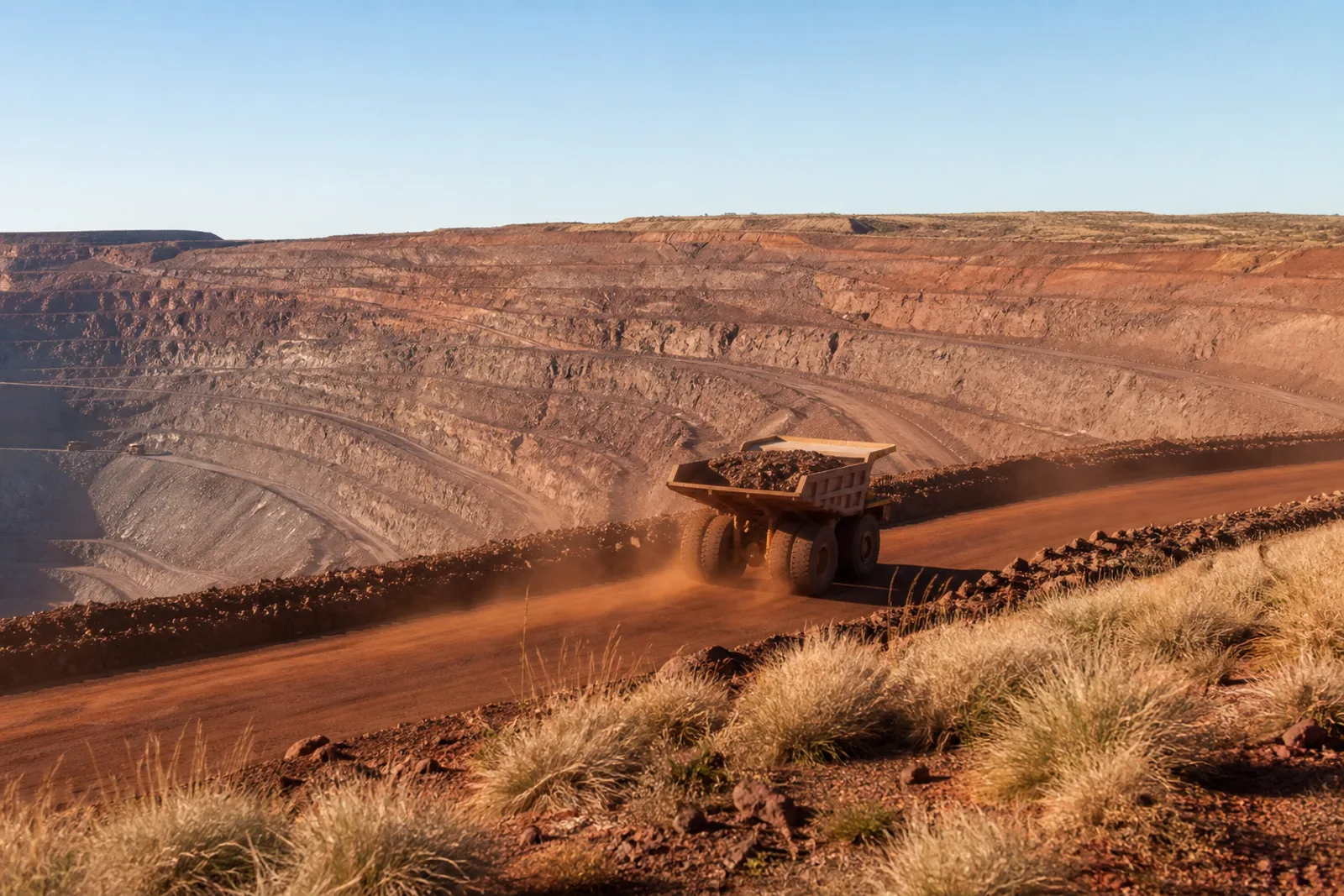
Illustrative commissioned editorial image, 2026. It is not evidence for any site named in this report.
Dating & evidence note
This is a new 2026 report. It does not claim to have been published earlier. Counts describe the sourced records in this register at review date and are not production, reserve or legal-status claims.
What this report is for
Home to one of the world’s great copper–uranium–gold systems, the historic Copper Coast, and most of Australia’s opal. This page begins with what is actually present in the published register, then points back to the authorities behind those records.
At review date the group comprises 63 operating, 50 in development, 11 care & maintenance. A status is the latest value ingested from the cited release; it should be rechecked with the issuer before operational, commercial or travel decisions.
The most frequently recorded commodities in this reading set are Gold (22), Copper (18), Iron ore (18), Hard rock & aggregate (15), Silver (12), Sand & gravel (12). A count is a count of records, not tonnes, output or economic importance.
Register map
The map makes distribution legible without implying a tenure boundary. Hover a point to identify the record; use the working list for the full source page.
Mines and quarries in South Australia: register notes124 plotted records
Orientation only. Points are source coordinates for published records; they are not tenure, access or regional boundaries.
Do you hold family mining records from South Australia?
Diaries, field notes, maps, assay books and photographs can reconnect names,
places and workings that formal datasets omit. We digitise, preserve and credit —
on your terms, under a written agreement.