The short version
- Resources Victoria associates James Esmond with Victoria’s first officially recognised gold discovery; State Library Victoria uses the narrower wording that he first reported a discovery of payable gold.
- Heritage Victoria’s Clunes notes say the colonial rewards committee recognised March 1850 for the field and credited Campbell, Esmond and Bruhn with the first finds along the same auriferous reef.
- Those statements answer different questions. A field discovery, a payable sample, a public report and later distribution of official credit do not have to produce one name.
- The Clunes geology matters because the early finds were associated with an outcropping reef in a basalt plain rather than a simple version of a shallow alluvial rush.
- The most useful next contribution is a dated document: correspondence, reward evidence, a newspaper notice, a map annotation or a family paper that establishes who knew what and when.
Start with a claim ledger, not a heroic biography
A “first discoverer” headline usually asks one name to carry several events. At Clunes the safer method is a ledger with separate columns for finding a specimen, identifying the locality, judging whether the gold was payable, disclosing the find, causing a public notice and receiving later official recognition. William Campbell, Dr Hermann Bruhn and James Esmond can occupy different cells in that ledger without any name being erased.
The wording of each authority is the first evidence. Resources Victoria calls the Clunes discovery associated with Esmond the first officially recognised Victorian gold discovery. State Library Victoria describes Esmond as the first person to report a discovery of payable gold in Victoria. Heritage Victoria’s field notes record a later committee crediting Campbell, Esmond and Bruhn. “Recognised”, “reported” and “credited” are not synonyms.[1][4][3]
A useful article therefore attributes the exact formulation. It should not upgrade a source saying “reported payable gold” into “first human to see gold”, or use a later committee decision as proof that all three men acted at the same moment. The ledger makes disagreement legible and tells a contributor what kind of source could alter a particular cell.
March 1850, the 1850 find and the July 1851 announcement are different dates
Resources Victoria’s history places a find at Clunes in 1850 and says it was not officially announced until July 1851. Heritage Victoria’s Clunes notes say the goldfields rewards committee recognised March 1850 as the discovery date. The difference between event and announcement is central: news can be delayed, a specimen can pass through several hands and administrative recognition can occur much later.[2][3]
For a dated sequence, every source needs both an event date and a creation date. A letter written in 1850 may be close to the event. A newspaper printed in July 1851 proves that a version was public by then. A committee convened decades later documents an official assessment of competing memories. A monument records the civic story chosen at the time of commemoration. None should silently borrow the evidentiary weight of another.
This is why “first” should always carry a noun: first officially recognised discovery; first documented public report of payable gold; first date later accepted by the rewards committee. If an archive supplies a new earlier notice, it may change the public-report column without deciding who first observed the reef.
What the three-name committee credit does—and does not—establish
Heritage Victoria’s historical notes state that the rewards committee credited Campbell, Esmond and Bruhn with obtaining the first gold along a single auriferous reef. That is strong evidence for the committee’s allocation of credit and for the shared physical subject of the claims. It does not, in the wording available here, provide a minute-by-minute sequence or prove that each man performed the same act.[3]
The next research step is to find the committee’s underlying material: petitions, statements, correspondence, witness lists, minutes and the wording of any recommendation. A summary tells readers the outcome. The underlying file can show the test applied, whether the men claimed independently, what dates they supplied and how the committee treated delay or hearsay.
Family papers can add valuable context, but they must be described by type and date. A contemporary letter can establish knowledge or travel. A later memoir may preserve a family account while remaining vulnerable to retrospective reputation. A labelled specimen can be important if its chain of custody and annotation history are known. “Kept in the family” is provenance information, not automatic authentication.
The reef explains why the familiar gold-rush picture is incomplete
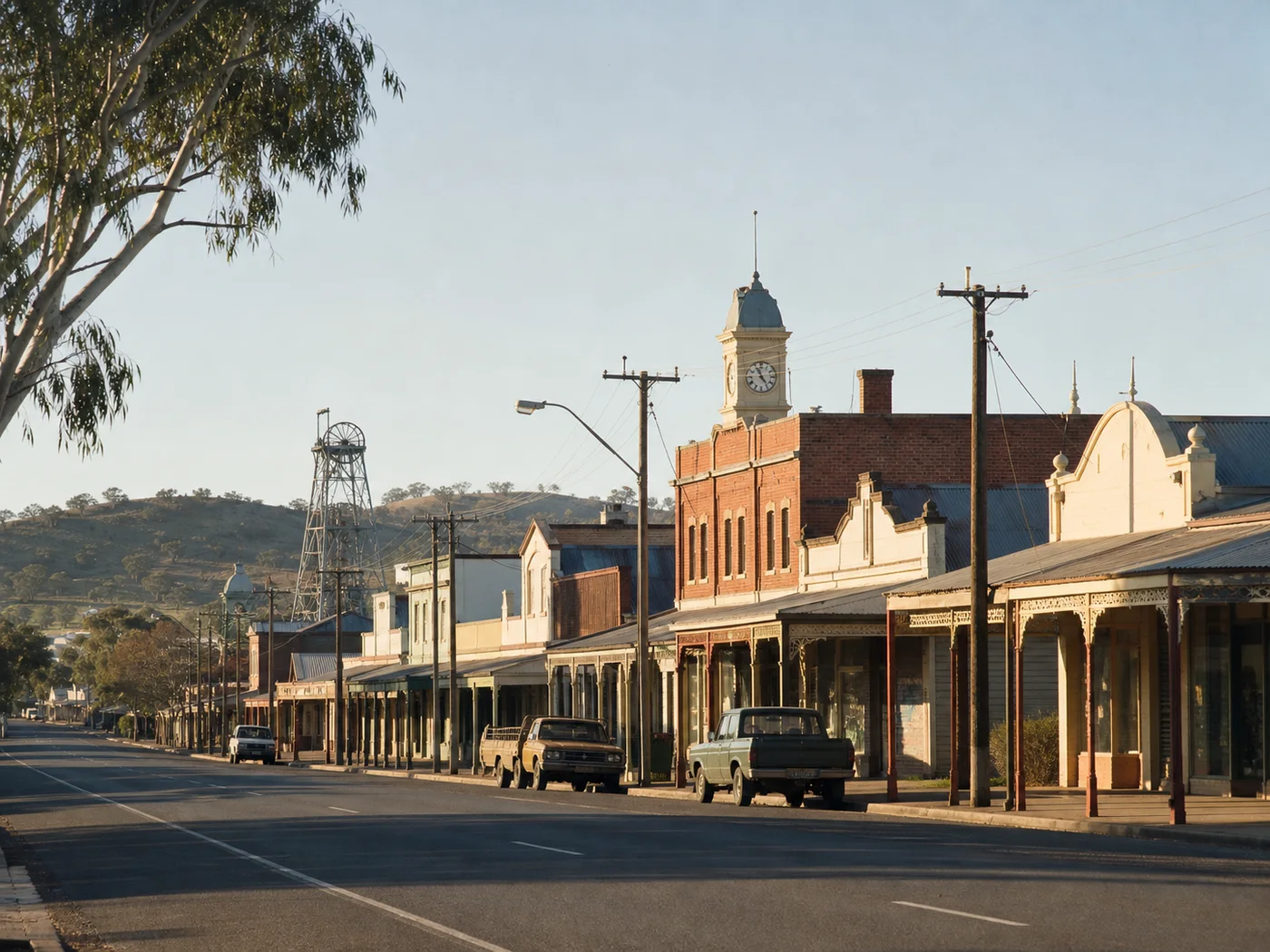
Heritage Victoria describes the Clunes finds as occurring along an auriferous reef outcropping on a hill amid a basalt plain. Its notes distinguish the field from many Victorian rushes because shallow alluvial gold was comparatively limited, although deep leads beneath basalt were also worked. The first-find story is therefore tied to recognising and communicating a reef occurrence, not only to washing loose gold from a creek.[3]
Geology cannot identify the first human discoverer. It can test whether later descriptions fit the mapped setting, explain why different observers might encounter reef and alluvial evidence, and show why a locality label may cover more than one kind of working. A geological explanation should be separately authored or reviewed and should never turn a historical claim into a modern resource statement.
This distinction creates a strong contributor brief. A mining historian can build the documentary sequence; a geologist can explain the reef, basalt and deep-lead context; a local collection can supply plans or photographs; and a descendant can help interpret a letter. Each role adds a layer without being made responsible for the others.
The source trail from a web page to the original record
Begin with the two official summaries and the Heritage Victoria field notes, then follow their footnotes and bibliography rather than repeatedly quoting the summaries. State Library Victoria’s goldmining guide provides collection pathways for manuscripts, maps, pictures, newspapers and published histories. PROV’s council-record guide helps identify the historical municipality and series when the question concerns roads, rates, memorials or local administration.[5][6]
Search name variants and roles, not only full names. Bruhn may appear with a title or altered spelling; Campbell can be buried among station, pastoral or correspondence records; Esmond may appear in accounts of reporting, rewards or later commemoration. Search Clunes alongside Port Phillip, colony, reef, sample, reward and discovery. Record the negative searches as well as the finds.
A clean evidence pack contains an image or catalogue link, reference number, creator, date, repository, rights status, transcription and a two-sentence note saying exactly what the item establishes. It also records uncertainty: approximate date, later annotation, missing page, unknown hand or a claim that cannot yet be corroborated.
The Clunes fieldbook: a reproducible research worksheet
Open a worksheet with one row for every document, not one row for every person. Record the catalogue identifier, repository, creator, creation date, event date, format, named people, place wording and the claim it can support. Add a separate column for later annotations. This prevents a date written on the back of a later copy from being treated as the date the original information was created.
Run the newspaper search as a dated sequence. Begin with July 1851 and work backward and forward using Clunes, reef, quartz, payable, Campbell, Bruhn, Esmond, sample, reward and spelling variants. Record the earliest accessible item and then search for the item it cites or repeats. A reprinted paragraph can widen circulation without being an independent witness.
Build a map register beside the document register. For each plan or sketch, note title, surveyor or creator, date, scale, north direction, place names, reef depiction, later annotations and repository. Do not force separate nineteenth-century descriptions onto one modern point. If two sources describe the same reef differently, show both outlines or labels with their evidence dates.
Create a person authority file for Campbell, Bruhn and Esmond. Preserve titles, initials, spelling variants, occupations, addresses and known associations only when a source supports them. Link each assertion to a document. This avoids confusing people with similar names and makes it possible for a descendant or archivist to correct one identity without rewriting the entire discovery story.
Treat commemoration as its own timeline. Catalogue monuments, plaques, street names, anniversaries, exhibitions and published local histories by creation date. Record who commissioned each item and the wording used. A sequence of commemorations can show how official recognition changed, which names moved into or out of the public story and where a committee decision was simplified.
The release gate is straightforward: two retrievable sources for a major new claim where possible, exact attribution for a single-source statement, a visible unresolved label for conflict and rights review for every image. A geological paragraph receives geological review; a family quotation returns to the contributor for approval; a catalogue correction can be published with a short version note.
Six records that could materially improve the Clunes account
The priority list is narrow: the rewards committee file or a precise catalogue reference; the earliest dated correspondence describing the reef or sample; the earliest newspaper notice that can be tied to a source; a map showing the claimed locality and its date; a family document with a documented custody chain; and the council file for a discovery monument, street name or anniversary interpretation.
A contributor does not need to solve the case. A catalogue number can reconnect a summary to an original file. A correction can separate two people with similar names. A photograph of the front and back of a document can reveal an annotation date. A council librarian can identify which predecessor municipality created the relevant record without expressing a view on who deserves credit.
Accepted evidence is added with a visible source note and change date. Disputed interpretations remain labelled. The page does not offer payment for a preferred conclusion, and contributor access is never an investment or commercial reward. Credit, anonymity, image rights and quotation approval are agreed before publication.
Frequently asked questions
6 answersWas James Esmond the first person to find gold in Victoria?
The official sources reviewed here support narrower statements: Resources Victoria associates Esmond with the first officially recognised discovery, and State Library Victoria describes him as first to report payable gold. Neither wording proves he was the first person ever to observe gold in Victoria.
Why are Campbell and Bruhn also credited?
Heritage Victoria’s Clunes notes say the colonial rewards committee credited Campbell, Esmond and Bruhn with first finds along the same reef. The underlying committee file is the best next source for how that credit was assessed.
Was the discovery in 1850 or 1851?
The sources distinguish a find or recognised discovery date in 1850 from the official public announcement in July 1851.
Was Clunes an alluvial goldfield?
Heritage Victoria describes an outcropping auriferous reef in a basalt plain and says shallow alluvial gold was comparatively limited, although deep leads beneath basalt were worked.
What evidence can a family contribute?
Dated letters, diaries, labelled maps, specimen records, photographs and custody information are useful. A description or catalogue reference is enough to start; originals should not be sent.
Will a new source make the site choose one winner?
Only if the evidence supports one defined claim. The page can preserve different names for discovery, reporting and later official credit.
Sources and continuation points
- Resources Victoria — Gold mines and discoveryLinked authority or collection reference; no additional data ingested · retrieved 2026-08-25
- Resources Victoria — History of gold mining in VictoriaLinked authority or collection reference; no additional data ingested · retrieved 2026-08-25
- Heritage Victoria — Clunes Goldfield historical notesLinked authority or collection reference; no additional data ingested · retrieved 2026-08-25
- State Library Victoria — Clunes, the golden townLinked authority or collection reference; no additional data ingested · retrieved 2026-08-25
- State Library Victoria — Goldmining collection guideLinked authority or collection reference; no additional data ingested · retrieved 2026-08-25
- Public Record Office Victoria — Victorian council recordsLinked authority or collection reference; no additional data ingested · retrieved 2026-08-25
Know something this report is missing?
Send a source-backed correction, material or geology lead, event, current-site evidence, photograph or family record. We preserve the evidence level and credit you—or keep you anonymous—after human review.