The short version
- Choose an event by the work you need to do: technical learning, quarry operations, procurement, policy, project finance, local relationships or investor communication.
- The calendar includes verified organiser dates current at 24 August 2026 and clearly marks dates that remain to be confirmed.
- A conference presentation, exhibitor claim or market pitch is a lead—not independent technical, commercial or investment verification.
- Useful participation continues between headline conferences through AusIMM branches, WIMnet, IQA branches, AMEC, Austmine and recurring local forums.
A useful calendar begins with the decision you need to make
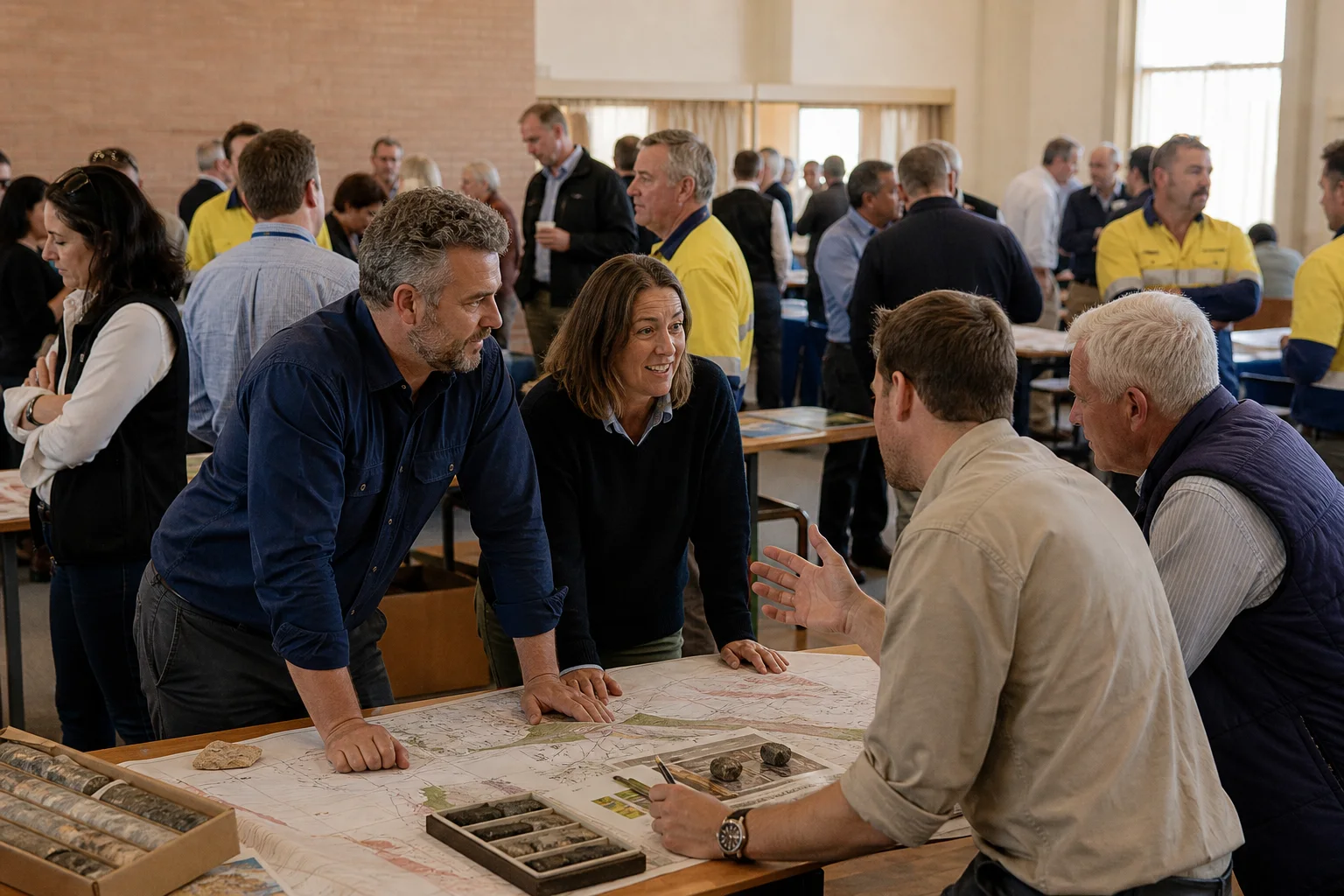
The Australian resources calendar is not one market. A quarry manager seeking practical operating exchange will not get the same value from a resources-investment conference as from an Institute of Quarrying gathering. A process engineer may prioritise Mill Operators. A Victorian adviser or technical professional may build relationships through Melbourne Mining Club. A supplier assessing national demand may need a large exhibition such as IMARC plus smaller technical or branch events.
This report therefore describes audience and format before it lists dates. It also separates organiser facts from editorial guidance. Dates, places and event names come from official event or professional-body pages retrieved at review date. Descriptions of who may find them useful are editorial orientation, not claims about attendance, deal flow or guaranteed outcomes.
Before booking travel, open the official page and confirm the current date, venue, program, ticket conditions and cancellation policy. Conference calendars move. A page that was accurate in August can become wrong after a venue or program change, which is why each card carries a visible review date and direct organiser link.
Technical and operating forums
AusIMM’s calendar is the broadest professional starting point in this list. Upcoming entries at review date included Critical Minerals in Brisbane, the International Mine Health and Safety Conference in Perth, Mill Operators in Brisbane and Strategic Mine Planning in Perth. The institute also carries branch, student and WIMnet activity, so people who cannot justify a national conference can still find smaller professional networks.[3]
For quarrying, the Institute of Quarrying Australia National Conference is the obvious national anchor. Its audience is closer to extractive operations, plant, safety, management and quarry supply than a mine-finance event. IQA branch activity can be especially useful because construction-materials problems are local: geology, planning, transport, product demand and community relationships vary sharply by district.[2]
The best technical event preparation is a one-page problem statement. Name the operating constraint, what has been tried, the evidence available and the people you need to meet. That changes a conference from passive brochure collection into structured research. Afterward, record which claims came from a paper, a vendor, a peer conversation or your own observation; those evidence types should not be merged.
Industry, policy and market-facing conferences
IMARC combines conference and exhibition functions and attracts a wide resources audience. It can be useful for government engagement, international market context, supplier discovery and a concentrated series of meetings. Its scale is also a reason to plan narrowly: identify target sessions and organisations before arrival, and verify commercial or technical claims after the event rather than treating exhibition visibility as qualification.[1]
Diggers & Dealers in Kalgoorlie and investor-oriented conferences such as RIU Sydney and Noosa occupy a more market-facing part of the calendar. Presentations can help identify projects, management narratives and upcoming catalysts. They are not independent due diligence. Company statements should be checked against ASX announcements, competent-person reporting, title and approval records, financial statements and appropriate professional advice.[5][6][7]
Melbourne Mining Club’s recurring forums offer a different model: a local institutional network built around speaker events. For Victorian resources professionals, repeated contact can be more valuable than a single national trip. The Club describes itself as a not-for-profit joint initiative of the Minerals Council of Australia and AusIMM, which helps users understand its institutional context.[4]
How suppliers and buyers should use an event list
A supplier should first match capability to audience. A laboratory, quarry plant vendor, environmental consultant and corporate adviser do not share the same buyer or procurement cycle. Check the exhibitor and delegate profile, then decide whether the event supports discovery, technical learning, channel partnerships, recruitment or live opportunities. “Everyone in mining” is not a usable target market.
Buyers can use event lists to understand the market before issuing a request, but presence at an event is not a supplier credential. Verify the legal entity, relevant licences or accreditation, named delivery team, comparable work, insurance, safety systems, capacity and commercial scope. A useful directory records where a company’s claimed capability came from and when it was checked; it does not transform sponsorship into endorsement.
Smaller branch and network events can outperform large exhibitions for specialised work because the conversation is narrower and repeat attendance builds context. AMEC calendars, Austmine’s METS network, AusIMM branches and IQA branches provide continuation points between national dates. The register links those networks rather than copying an unmaintainable volume of local listings.[8][3][2]
Where advisers and brokers fit—and how to verify the role
Market-facing conferences bring together company executives, corporate advisers, stockbrokers, M&A specialists, investors and technical consultants. Those are not interchangeable roles. In current Australian resources-market research, firms such as Argonaut, RFC Ambrian, Euroz Hartleys, Petra Capital and Canaccord Genuity publicly describe resources-sector corporate-finance, advisory or broking capabilities. This is a neutral research list based on their own sites, not a recommendation, league table or statement that every firm handles every mine, quarry or transaction type.[9][10][11][12][13]
Before relying on an adviser, identify the Australian legal entity, named team, exact service, jurisdiction and transaction structure. Check ASIC Professional Registers and ask which licence or professional authority covers the proposed activity. Verify claimed mandates through public client announcements where possible, ask how the firm is paid, and understand conflicts. Conference participation, sponsorship and a polished transaction list are leads for due diligence, not substitutes for it.[14]
This publication does not currently accept mine-sale mandates or arrange investment introductions. Asset sales, tenement transfers, company-share sales, farm-ins, joint ventures and capital raisings can engage different state-transfer and financial-services requirements. A future opportunity register is being researched behind a legal gate; the public event calendar remains editorial discovery only.
How this calendar stays credible over time
Every entry needs a stable organiser, official URL, date status and last-checked date. If an organiser has announced only a month, the calendar should say month confirmed and exact dates pending. Cancelled, moved and completed events need a visible state rather than deletion without explanation. The record should preserve the former date so that old links and travel references remain intelligible.
Editorial priority should follow usefulness and evidence, not payment. Sponsorship may support a publication only if commercial relationships are disclosed and cannot buy a “major” label, ranking or favourable review. Submitted regional events belong in the same verification queue as editor-found events. That keeps the page open to smaller communities without becoming an unmoderated noticeboard.
After an event, the most durable outputs are proceedings, papers, recordings, official announcements and properly attributed interviews. Those can support later city, family, technology and history articles. A fabricated back catalogue would create the appearance of age; a dated, linked trail of real source material creates actual credibility.
Make room for local knowledge and regional voices
Industry calendars often privilege events with strong digital marketing. Local historical societies, regional business groups, field naturalist clubs, geological groups, council briefings and community information sessions may hold more specific knowledge about a place. They should not be called “major mining events” without evidence, but they can be valuable additions to a locality research trail.
A contribution form can capture those leads with simple fields: event name, organiser, place, date, official link, audience and why it matters. Editors should verify the organiser page before publication, distinguish public events from invitation-only meetings, and avoid publishing private contact details. Past-event pages can remain useful when they link to proceedings, papers, recordings or a reliable archive.
Interaction works best when people get something useful back. Reviewed contributors can receive a source note, a relevant change alert, recognition or archive access where rights allow. The exchange is editorial and documentary. It does not promise attendance, introductions, commercial opportunity, investment access or payment.
The follow-up system that turns a forum into research
Within a day, classify each note as a source, claim, contact, question or action. Link papers to their proceedings page and company statements to the primary announcement. Record the date and context of conversations. If a claim affects safety, investment, legal rights or a purchase decision, verify it through an authoritative source or appropriately qualified professional before relying on it.
Within a week, publish only what is useful and attributable. A short event debrief can identify themes and official papers without pretending the publication endorsed every presentation. A supplier or project lead should enter a review queue with provenance. A disputed statement should remain private until the parties and source record have been checked.
Over time, the calendar becomes a network map: which professional bodies cover which topics, where regional communities meet, and which recurring events produce papers or durable public records. That is more useful than a long undifferentiated list—and more credible than claiming a 15-year editorial history the publication did not actually have.
Verified event cards
Checked 24 Aug 2026A recurring Melbourne forum from the not-for-profit Melbourne Mining Club, a joint initiative of the Minerals Council of Australia and AusIMM.
Official page ↗21–23 September 2026 · Brisbane, QueenslandAusIMM Critical Minerals Conference 2026Technical conferenceAusIMM’s conference program for the critical-minerals supply chain, listed on the institute’s official events calendar.
Official page ↗6–8 October 2026 · Gold Coast, QueenslandInstitute of Quarrying Australia National Conference 2026Quarry conferenceThe national conference of the Institute of Quarrying Australia, with the quarrying and construction-materials community as its core audience.
Official page ↗5–7 October 2026 · Perth, Western AustraliaInternational Mine Health and Safety Conference 2026Technical conferenceAn AusIMM conference listed on the institute’s official calendar; confirm the final program and attendance details with the organiser.
Official page ↗19–21 October 2026 · Brisbane, QueenslandAusIMM Mill Operators Conference 2026Technical conferenceA technical operations conference listed by AusIMM for people working across mineral-processing plants and operating practice.
Official page ↗27–29 October 2026 · ICC Sydney, New South WalesInternational Mining and Resources Conference (IMARC) 2026Conference and exhibitionA large Australian mining conference and exhibition. The official site is the source for speakers, exhibitors, access and any schedule changes.
Official page ↗17–19 November 2026 · Perth, Western AustraliaStrategic Mine Planning Conference 2026Technical conferenceAn AusIMM technical conference listed on the institute’s current events calendar.
Official page ↗4–6 May 2027 · Sydney, New South WalesRIU Sydney Resources Round-up 2027Resources investment conferenceA resources-company presentation and networking conference. Company presentations are not independent research and require separate verification.
Official page ↗July 2027 — exact dates to be confirmed by organiser · Noosa, QueenslandNoosa Mining Investor Conference 2027Resources investment conferenceThe official conference site flags the 2027 event; the exact July dates remain unconfirmed in this register at review date.
Official page ↗Frequently asked questions
6 answersWhat are the major Australian mining events in late 2026?
The verified list includes AusIMM technical conferences, the IQA National Conference, IMARC, Melbourne Mining Club events and other professional-body activity. Use the live organiser page because dates and programs can change.
Which event is most relevant to quarry operators?
The Institute of Quarrying Australia National Conference and IQA branch activity are the most directly quarry-focused entries in this calendar.
Are investor-conference presentations independent research?
No. Treat them as company or promoter communications and verify material claims through primary announcements, official registers and professional advice.
How can a supplier choose an event?
Match the event audience to a specific capability and objective—technical learning, buyer discovery, partnerships, recruitment or policy—then verify the delegate and exhibitor profile with the organiser.
Can I submit a regional event or forum?
Yes. Use the contribution form with the organiser, place, date, official link and audience. Public listing follows editorial verification.
Why is the Noosa 2027 date not exact?
The organiser had flagged July 2027 at review date but an exact date was not confirmed in this research. The calendar preserves that uncertainty rather than inventing precision.
Sources and continuation points
- IMARC — official conference siteLinked authority reference; no additional data ingested · retrieved 2026-08-24
- Institute of Quarrying Australia — National ConferenceLinked authority reference; no additional data ingested · retrieved 2026-08-24
- AusIMM — conferences and events calendarLinked authority reference; no additional data ingested · retrieved 2026-08-24
- Melbourne Mining Club — official siteLinked authority reference; no additional data ingested · retrieved 2026-08-24
- Diggers & Dealers — official siteLinked authority reference; no additional data ingested · retrieved 2026-08-24
- RIU Sydney Resources Round-up — official siteLinked authority reference; no additional data ingested · retrieved 2026-08-24
- Noosa Mining Investor Conference — official siteLinked authority reference; no additional data ingested · retrieved 2026-08-24
- AMEC — industry events calendarLinked authority reference; no additional data ingested · retrieved 2026-08-24
- Argonaut — official corporate siteLinked authority reference; no additional data ingested · retrieved 2026-08-24
- RFC Ambrian — official corporate siteLinked authority reference; no additional data ingested · retrieved 2026-08-24
- Euroz Hartleys — corporate financeLinked authority reference; no additional data ingested · retrieved 2026-08-24
- Petra Capital — servicesLinked authority reference; no additional data ingested · retrieved 2026-08-24
- Canaccord Genuity — natural resourcesLinked authority reference; no additional data ingested · retrieved 2026-08-24
- ASIC — Australian financial services licensingLinked authority reference; no additional data ingested · retrieved 2026-08-24
Know something this report is missing?
Send a source-backed correction, material or geology lead, event, current-site evidence, photograph or family record. We preserve the evidence level and credit you—or keep you anonymous—after human review.